
How Often Should Grease Traps Be Cleaned in Atlanta to Avoid Fines and Extra Costs
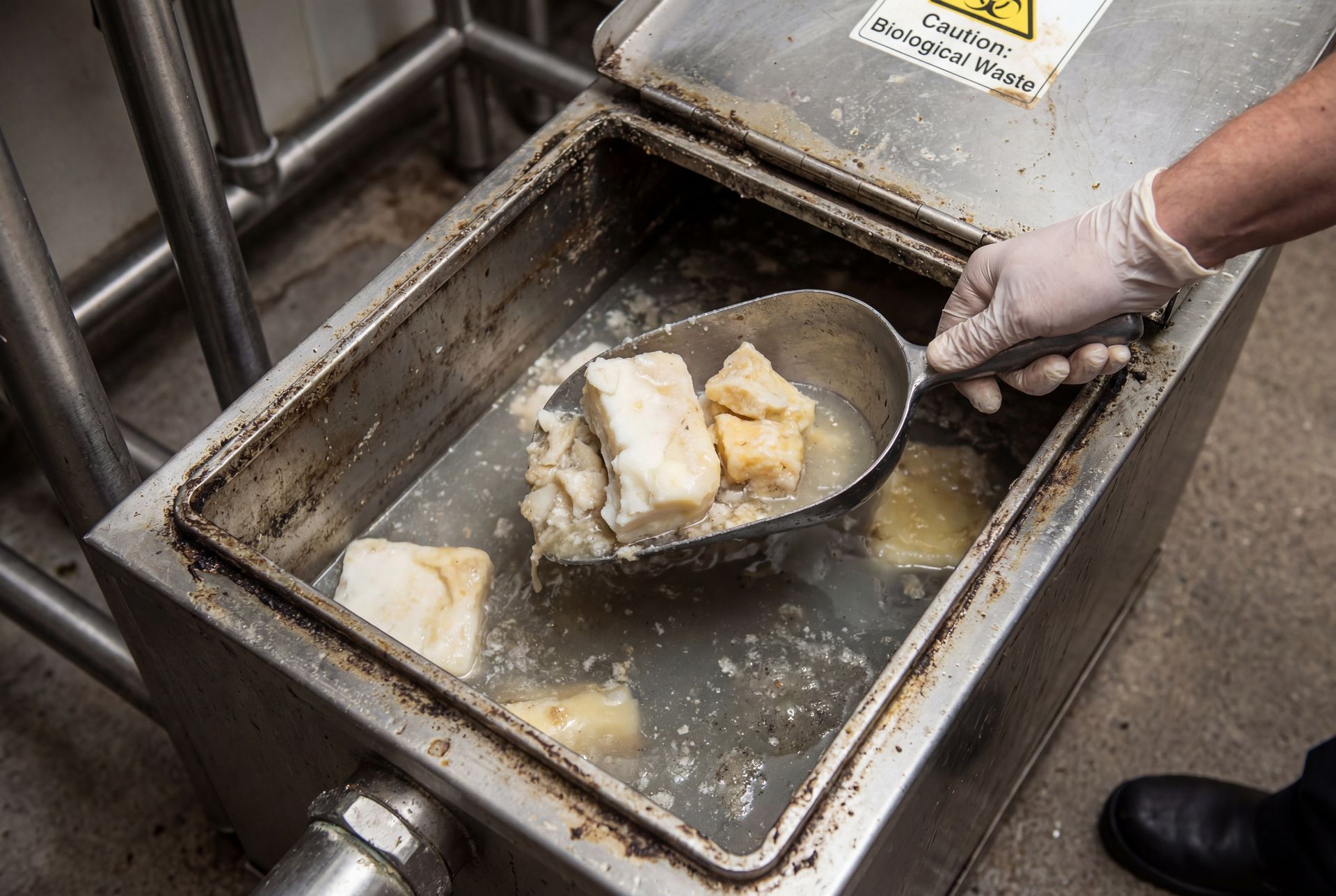
In Atlanta and surrounding jurisdictions, grease trap and interceptor cleaning is governed by baseline requirements. Indoor grease traps are generally required to be cleaned at least every 14 days, while outdoor grease interceptors must be serviced at least every 90 days.
Time-based requirements establish minimum intervals, but the 25 percent rule often determines whether more frequent service is needed. A grease trap or interceptor is considered noncompliant if the combined volume of fats, oils, grease (FOG) and solids exceeds 25 percent of the system’s capacity. In order to avoid penalties, businesses should adhere to a cleaning frequency that prevents the 25 percent threshold from being exceeded.
Documentation is also part of compliance. Cleaning manifests must be maintained and accessible, and failure to produce records can result in violations even if the system appears to be functioning properly.
Minimum Requirements Don’t Always Match Real-World Needs
Minimum service intervals are designed as a baseline, not a one-size-fits-all schedule. In practice, kitchens generate grease and solids at very different rates depending on how they operate.
A high-volume restaurant with multiple fryers may approach the 25 percent threshold well before the 90-day mark. A lower-volume kitchen using the same interceptor may not come close to that level within the same timeframe.
Where Businesses End Up Overpaying for Service
Some facilities operate on fixed schedules that may not reflect their actual grease output. This often happens when a cleaning interval is carried over from a previous tenant, applied across multiple locations with different volumes or set conservatively to avoid potential compliance issues.
In these cases, interceptors may be pumped when grease and solids levels are still well below the 25 percent threshold. While this does not create compliance issues, it can result in paying for grease interceptor service more often than needed without significantly reducing risk or improving interceptor performance.
Why Cutting Service Too Close Leads to Fines and Disruptions
Conversely, extending service intervals too far can create immediate compliance and operational problems. If grease and solids exceed 25 percent of capacity before the next scheduled cleaning, the system is already out of compliance, leaving you vulnerable to fines and additional hassles if you’re subject to a surprise inspection.
The 25 percent rule isn’t arbitrary. Exceeding the FOG limit can have operational consequences and put you at a higher risk for backups, odors, slow drainage and disrupted operations.
Trying to reduce grease trap service frequency without understanding actual accumulation rates often results in higher costs once violations, emergency service or downtime are factored in.
Operational Factors That Change How Often You Need Service
The rate at which a grease trap or interceptor fills is driven by day-to-day kitchen activity. Several factors can significantly affect how quickly grease and solids accumulate:
- The volume of fried or grease-heavy menu items
- The number of meals prepared during peak periods
- Dishwashing volume and pre-rinse practices
- How effectively food solids are kept out of the system
- Seasonal changes in customer traffic
Even small changes in menu or volume can shift how quickly a system reaches capacity, which is why schedules that once worked may no longer be appropriate.
How to Set the Right Cleaning Frequency for Your Kitchen
The most reliable way to determine the right cleaning interval is to look at grease and solids levels at the time of service. This provides a baseline for how quickly your system is filling under current conditions.
If the system is well below the 25 percent threshold at each visit, the interval may be more frequent than necessary. If it is approaching or exceeding that limit before the next scheduled grease interceptor service, the interval likely needs to be shortened.
Cleaning frequency should also be revisited when operational changes occur, such as menu updates, equipment additions or shifts in customer volume. Adjusting based on actual accumulation, rather than a fixed schedule, helps maintain compliance without unnecessary service.
Reducing Unnecessary Pump-Outs Without Risking Compliance
Keeping food solids out of the trap or interceptor helps preserve capacity and slows accumulation. Consistent scraping and use of strainers can make a measurable difference in how often the system needs to be pumped.
Maintaining proper flow through the system is also important. Poor flow conditions can allow grease to bypass separation or build up unevenly, leading to premature grease trap service needs.
These operational adjustments can extend intervals in a controlled way without increasing the risk of exceeding compliance thresholds.
When It Makes Sense to Reevaluate Your Current Grease Interceptor Servicing Schedule
It may be worth reviewing your current grease trap cleaning frequency if:
- You have changed your menu or added grease-producing equipment
- Your kitchen volume has increased or decreased
- You are consistently well below capacity at the time of service
- You have experienced a recent inspection issue or near miss
- You have taken over a space with an existing grease interceptor service schedule
Call (404) 419-6887 to discuss your current cleaning interval with Southern Green Industries.
Recent Blog Posts
Contact us Today for a FREE Quote
We are committed to making grease trap cleaning and fryer oil recycling as clean and easy as possible. If you’d like to learn more about our services or get a quote, give us a call at (404) 419-6887.
