
What Happens When a Co-Tenant’s FOG System Fails in Shared Plumbing Configurations
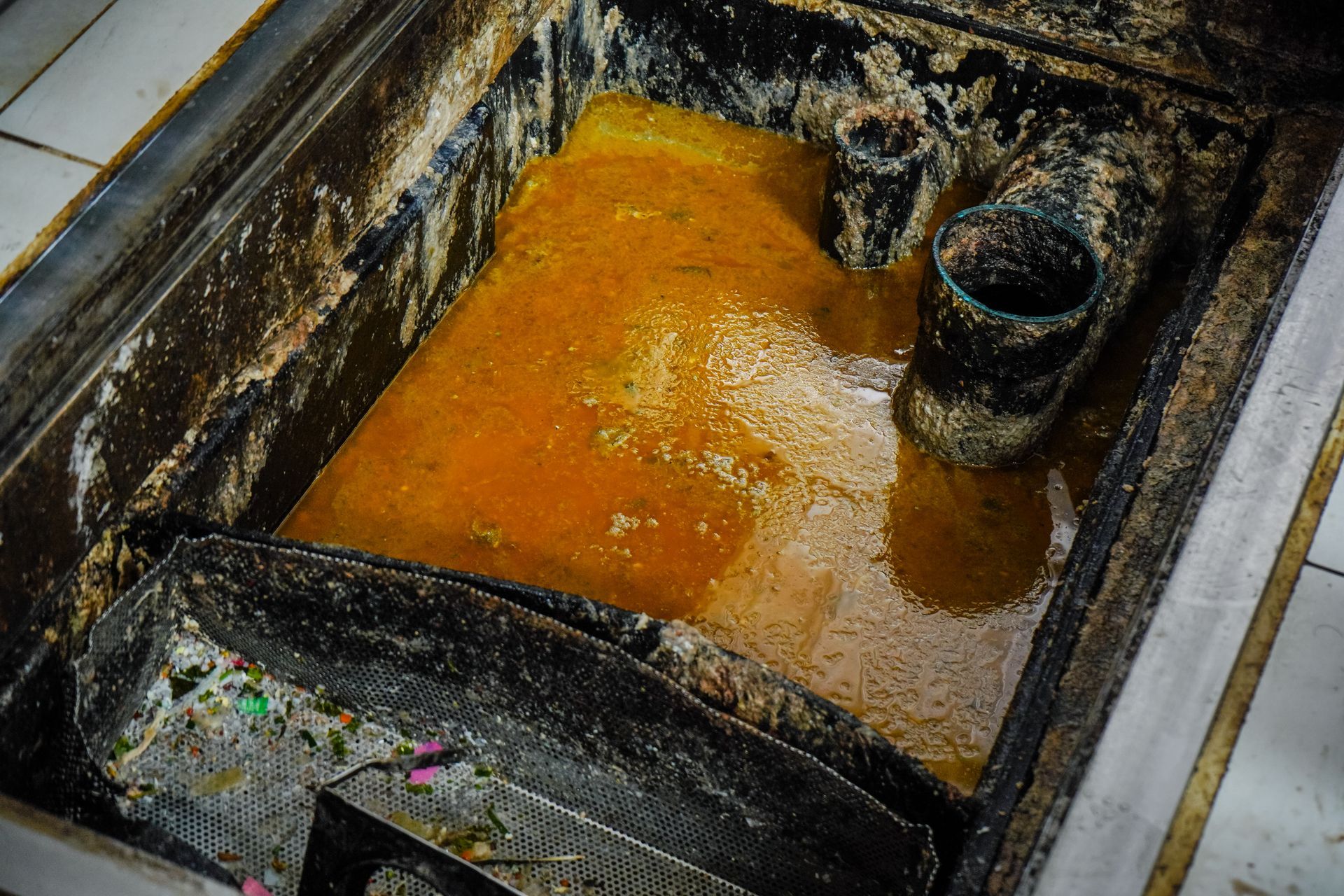
In strip malls, food halls, and commissary kitchens, wastewater systems are rarely as isolated as tenants assume.
While each kitchen may have its own grease interceptor or grease trap, many properties rely on shared laterals that connect multiple units before tying into the municipal sewer. When one tenant’s fats, oils, and grease (FOG) system fails, the consequences can travel well beyond their lease line.
How Shared Laterals Create Shared Consequences
In properties with shared laterals, wastewater from multiple tenants flows through the same downstream piping.
Grease does not respect unit boundaries or lease agreements. If one kitchen allows excessive FOG into the line due to poor maintenance, undersized equipment, or improper use, that grease can migrate. This can lead to:
- Grease accumulation downstream of multiple units
- Blockages that back up into adjacent kitchens
- Wastewater surcharging through floor drains in neighboring spaces
Even if only one tenant is at fault, the physical system does not distinguish between sources. Everyone connected to that line is exposed to the outcome.
Why Your Interceptor May Not Protect You
Many operators assume that a well-maintained interceptor fully insulates them from external risk. Unfortunately, in shared systems, that is not always the case.
Your interceptor is designed to protect the downstream sewer, not to defend against grease being forced back upstream from another tenant. If a neighboring unit overwhelms the shared lateral with grease, several things can still happen to your operation:
- Grease-laden wastewater can backflow toward your unit
- Odors can migrate through shared piping and vents
- Solids can settle near your connection point, slowing drainage
In short, your system can be compliant and functional, yet still be affected by conditions outside your control.
Inspection and Enforcement Complications
In the Atlanta metro area, shared plumbing configurations complicate inspections primarily when responsibility cannot be documented clearly. Watershed inspectors typically seek to identify a specific permit holder or tenant when grease buildup or blockages are found in a shared line.
Enforcement risk increases when service records are incomplete, when multiple tenants operate under a single permit or when the plumbing layout makes isolation impractical. In those cases, inspectors may require corrective action at the system level rather than attributing the issue to a single unit.
Facilities with consistent documentation and clearly defined maintenance responsibility are far less likely to see enforcement broaden beyond the individual tenant under inspection.
Signs You May Be Affected by a Co-Tenant’s FOG Issue
Shared system problems often show up subtly at first. Many operators notice symptoms before they realize the cause is external. Warning signs include:
- Unexplained grease or sewer odors, especially during off-hours
- Slow drainage despite regular interceptor service
- Backups occurring when your kitchen is closed or lightly used
- Grease residue appearing in floor drains unexpectedly
Why Timing Can Be a Clue
One of the strongest indicators of shared exposure is timing. If backups or odors occur when your kitchen is not producing grease, the source is likely upstream or adjacent. For example:
- Overnight backups when no cooking is happening
- Weekend issues tied to another tenant’s peak hours
- Problems appearing shortly after a neighboring unit opens or changes menu
These patterns often point to a shared system imbalance rather than an internal failure.
What to Do If You Suspect Shared System Exposure
If you believe a co-tenant’s FOG system is affecting your operation, early action matters. Waiting until a backup or citation occurs increases risk and cost. Recommended steps include:
- Document your own service history with clear, up-to-date records
- Notify property management in writing about observed symptoms
- Request shared lateral mapping or scoping to identify flow paths
- Coordinate with experienced vendors who understand shared systems
Why Shared Systems Require a Different Mindset
Operating in a shared plumbing environment requires more than just maintaining your own interceptor. It requires awareness, documentation, and coordination. Tenants who treat FOG management as a shared-risk issue rather than an isolated responsibility are better positioned to:
- Avoid surprise backups
- Navigate inspections confidently
- Protect their reputation with regulators and property managers
Proactive Support for Shared FOG Environments in Metro-Atlanta
Southern Green Industries works with food service operators and property managers to maintain grease interceptors and provide documentation that supports compliance.
Contact us at (404) 419-6887 for a free grease trap cleaning quote or to schedule one-off cleaning.
Recent Blog Posts
Contact us Today for a FREE Quote
We are committed to making grease trap cleaning and fryer oil recycling as clean and easy as possible. If you’d like to learn more about our services or get a quote, give us a call at (404) 419-6887.
