
Designing Grease Interceptor Access Points for Long-Term Serviceability
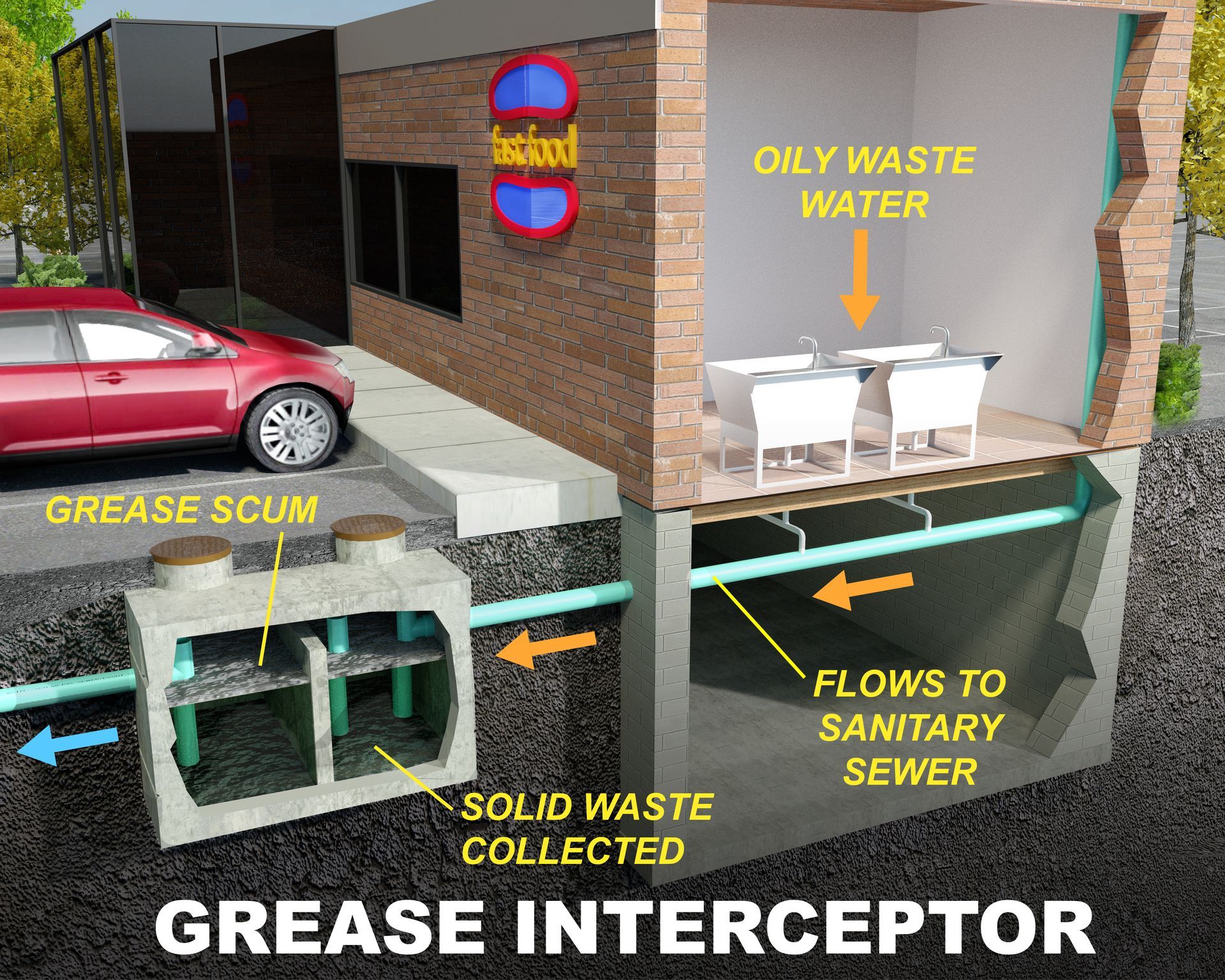
Poorly planned access points are one of the most common reasons interceptor service becomes more expensive than it needs to be. Contractors and design teams rarely get pushback on placement during construction, but operators feel the impact for years through longer pump-outs, difficult inspections and premature structural issues around lids and slabs.
Atlanta’s mix of soil conditions, heavy rainfall and busy urban sites only magnifies the consequences of poor access point placement. Thoughtful access design supports faster pump-outs, safer service areas and lower lifecycle costs.
Positioning Hatches With Service Logistics in Mind
Hatch placement affects everything from vacuum hose routing to how well technicians can reach inlet and outlet tees. Centering the lids over the compartments isn’t enough. The placement needs to support efficient movement of hoses, unobstructed opening of lids and clear access to internal structures.
Intercepting multiple utilities around the slab creates choke points that slow down service. A lid set too close to walls, bollards, mechanical pads or landscaping forces techs into awkward angles that reduce pump-out speed and make it harder to confirm full evacuation of solids. Even an extra foot of clearance around the hatch can be the difference between a 30-minute job and a 75-minute one.
For facilities with multiple traps, hatches should ideally be aligned so vacuum trucks can pull in once and reach each point without repositioning. Placement that requires repositioning multiple times increases labor time, risk of surface damage and potential interference with customer traffic. New builds with flexibility in pad orientation or parking layouts should prioritize direct approach paths when making hatch placement decisions.
Reinforcing the Slab Around Lids
The area surrounding interceptor lids takes more punishment than many slabs on commercial sites. Vacuum trucks roll close, lid pry points concentrate stress and repeated traffic cycles from forklifts or delivery vehicles wear the concrete faster than standard sidewalks or curbs.
Undersized reinforcement becomes apparent within a few years as cracking radiates from the lid ring or the frame begins to shift.
Slabs that are constructed with service traffic in mind reduce long-term repair spending. Reinforcing steel needs to create a true load-distribution structure around the lid rather than just a simple perimeter frame. Cross bracing around the access opening, consistent depth around the ring and proper compaction beneath the slab prevent settling that can tilt the lid and compromise the seal.
For sites expecting regular semi-truck deliveries, rating the slab at or above HS-20 loading provides a useful margin. Even when the truck never parks directly on the lid, turning forces within the service zone can stress the slab.
Field crews prefer lids set flush with the slab surface to prevent leverage forces that crack the concrete when lids are pried open. Recessed frames or beveled borders increase the risk of damaged edges.
Planning Vertical Clearances for Safe, Direct Access
Vertical alignment determines how easily technicians can reach tees, baffles and accumulated solids. When lids sit too high above the flow line or too far off-center, crews work blind or need additional tools to reach corners. The pumping process slows, and solids can remain in pockets that eventually harden into blockages.
A well-designed access point allows a straight drop to the internal structures that must be inspected at each service interval. Deep interceptors often require risers to bring the access lid to grade, but the riser should match the opening footprint to preserve the ability to vacuum each compartment properly. Narrow risers save material cost but increase service time over the life of the system.
Construction teams sometimes stack mismatched riser rings to accommodate shifting grade elevations late in a project. This creates offset columns that reduce interior visibility and introduce snag points for hoses.
A single-piece riser section or a properly aligned modular assembly prevents these service complications.
How Design Choices Affect Pump-Out Efficiency and Cost
Every design decision compounds once the system enters service.
- Misaligned lids require more labor time to reach internal components.
- Weak slabs incur repair expenses when equipment damages the perimeter.
- Shallow clearance around hatches forces vacuum trucks to stage farther away, reducing suction efficiency and increasing the time needed to break up solids.
Commercial kitchens with high FOG output feel these effects most. Heavy load cycles mean monthly or even biweekly pump-outs. A poorly designed access configuration multiplies the operational cost across every service visit.
Conversely, sites with smartly placed hatches, durable slabs and direct vertical access often cut their service duration by half. Technicians can evacuate each chamber completely, verify the condition of tees and baffles and close up the area without disrupting the customer’s traffic flow.
Work With a Partner Who Understands Long-Term Service Details
Southern Green Industries services interceptor designs ranging from compact indoor units to high-capacity outdoor systems across metro Atlanta.
Southern Green Industries excels at servicing all interceptors and traps, even those that may have been poorly configured or positioned. Regardless of your business’s situation, we strive to keep operating costs predictable.
Reach out to schedule a consultation online or give us a call at (404) 419-6887 for your current system.
Recent Blog Posts
Contact us Today for a FREE Quote
We are committed to making grease trap cleaning and fryer oil recycling as clean and easy as possible. If you’d like to learn more about our services or get a quote, give us a call at (404) 419-6887.
