
How Does Grease Trap Maintenance Differ Between Under-Sink Interceptors and In-Ground Grease Interceptors?
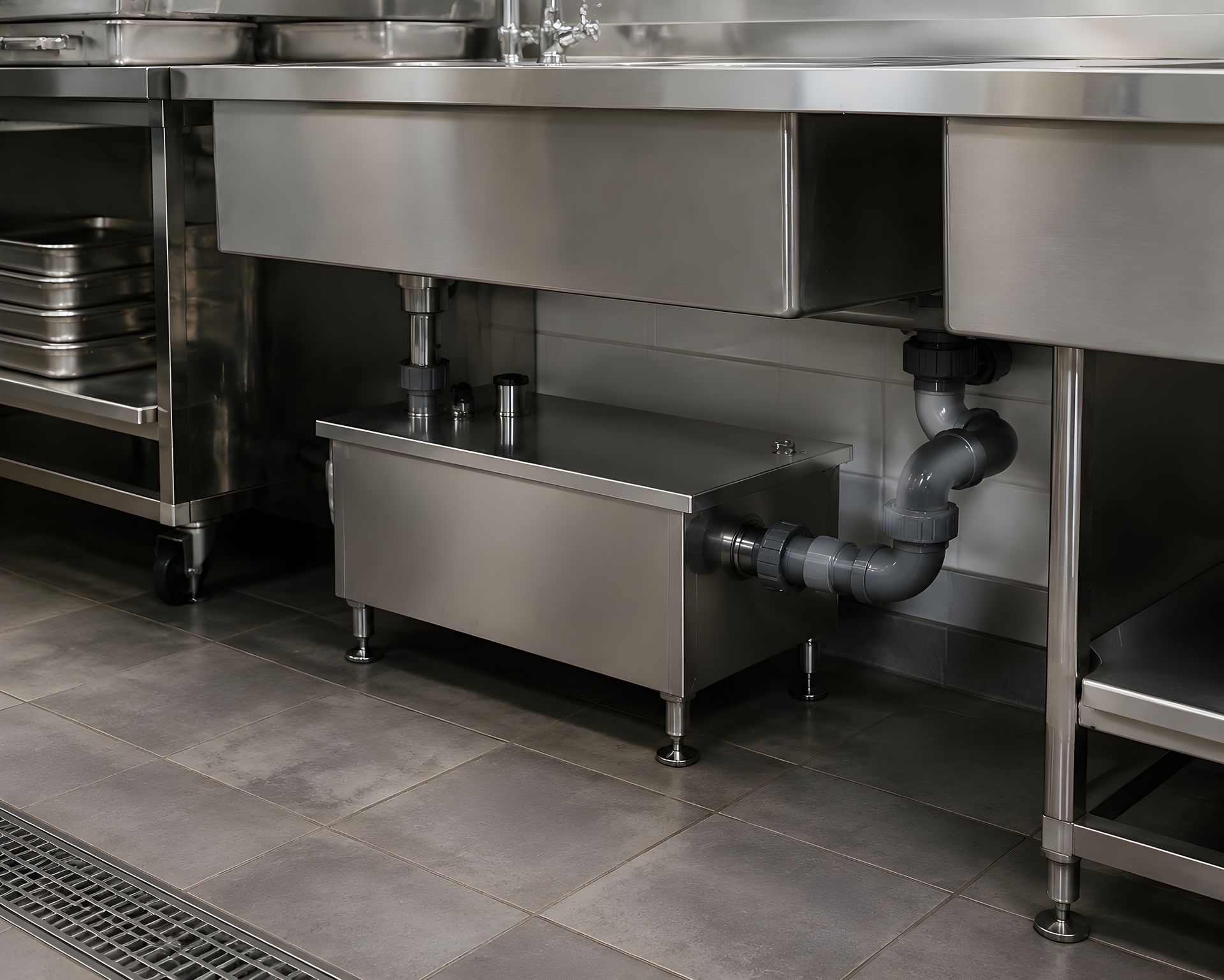
Not all grease interceptors require the same maintenance approach. An under-sink interceptor inside a commercial kitchen operates differently from a large in-ground grease interceptor outside the building, and the differences affect cleaning frequency, accessibility, service logistics and documentation.
Cleaning Frequency Depends on the System
One of the biggest differences between indoor and in-ground interceptors is how frequently they typically need to be serviced to remain compliant with Atlanta’s Grease Management Program.
Under-sink or indoor grease traps generally require more frequent cleaning because they are smaller and can fill relatively quickly. A restaurant may need service as often as every 14 days, depending on its applicable requirements and actual grease accumulation.
Larger in-ground interceptors may have a longer standard service interval, often around 90 days. However, both grease traps and interceptors must also remain below the 25% threshold for combined FOG and settled solids. If a unit reaches that limit before its next required cleaning date, it needs to be serviced sooner rather than waiting for the minimum scheduled interval.
The appropriate schedule should account for the type and size of the interceptor, the restaurant's operation and how quickly the unit is filling. The City of Atlanta's program establishes maintenance requirements, so operators should confirm the requirements applicable to their specific facility.
Accessibility Is a Major Difference
An under-sink grease traps are typically located inside the kitchen, making it relatively easy for a technician to access. However, that convenience comes with another challenge: the trap may be located in a busy food preparation or dishwashing area.
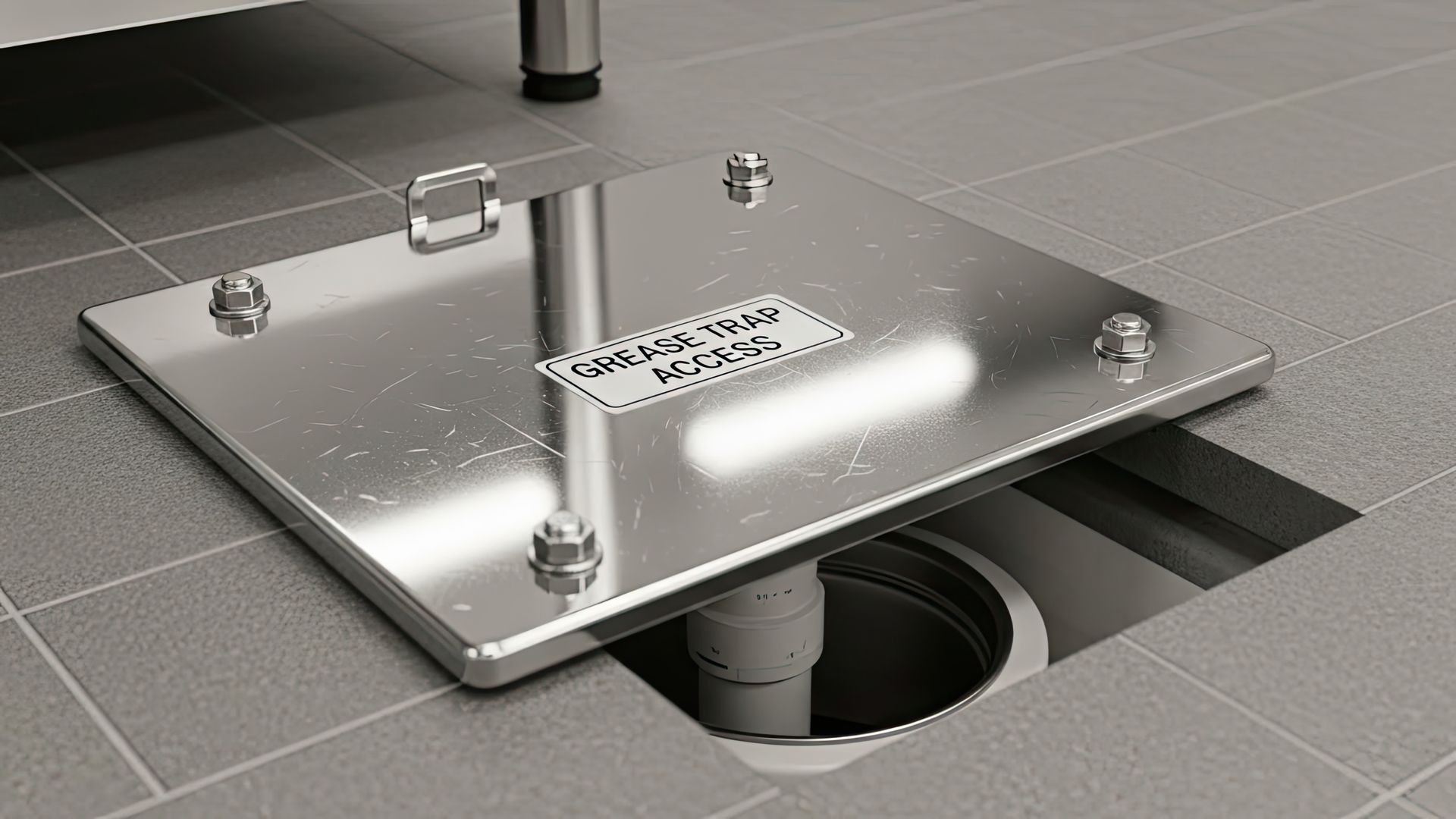
In-ground interceptors are generally located outside and may be substantially larger. While they don't take up valuable kitchen space, technicians need access to the interceptor's lids and a location where service equipment can be positioned safely.
Parked cars, delivery vehicles or other site activity may block access lids or prevent a vacuum truck from positioning close enough for efficient service. Working with a grease trap service provider that can schedule cleaning during off-hours or lower-traffic periods can help keep the interceptor accessible and reduce disruption to customers, employees and deliveries.
Typical Failure Points
With an under-sink interceptor, common concerns include rapid accumulation of grease and solids, odors, improper cleaning and limited capacity. Because these units are smaller, neglecting even a few service cycles can have noticeable consequences.
In-ground interceptors have greater capacity, but that doesn't mean they can be ignored. Accumulated grease and solids can reduce effective capacity, while damaged covers, access issues or problems with internal components can complicate maintenance.
Documentation Matters
Compliance with Atlanta’s FOG management rules depends on service history, not just how the trap or interceptor looks on inspection day. Even if the unit is clean when an inspector arrives, the business may still be asked to produce manifests showing that required cleanings were completed on schedule. Missing or incomplete records can create compliance problems even when the equipment itself appears to be in acceptable condition.
Southern Green Industries provides printed, emailed PDF and online manifests for grease trap cleaning and can forward relevant manifests to local regulators on behalf of customers. Keeping these records organized can help businesses demonstrate that they are following their grease management requirements.
Southern Green Industries provides dependable grease trap and interceptor cleaning with flexible scheduling designed to minimize disruption to restaurant operations. We can also coordinate used fryer oil pickup and recycling, giving food service businesses one provider for both grease management needs.
Fill out our form or call (404) 419-6887 to request a quote.
Recent Blog Posts
Contact us Today for a FREE Quote
We are committed to making grease trap cleaning and fryer oil recycling as clean and easy as possible. If you’d like to learn more about our services or get a quote, give us a call at (404) 419-6887.
