
Why Dishwashing Practices Can Have a Bigger Impact on Grease Interceptor Performance Than Cooking Volume
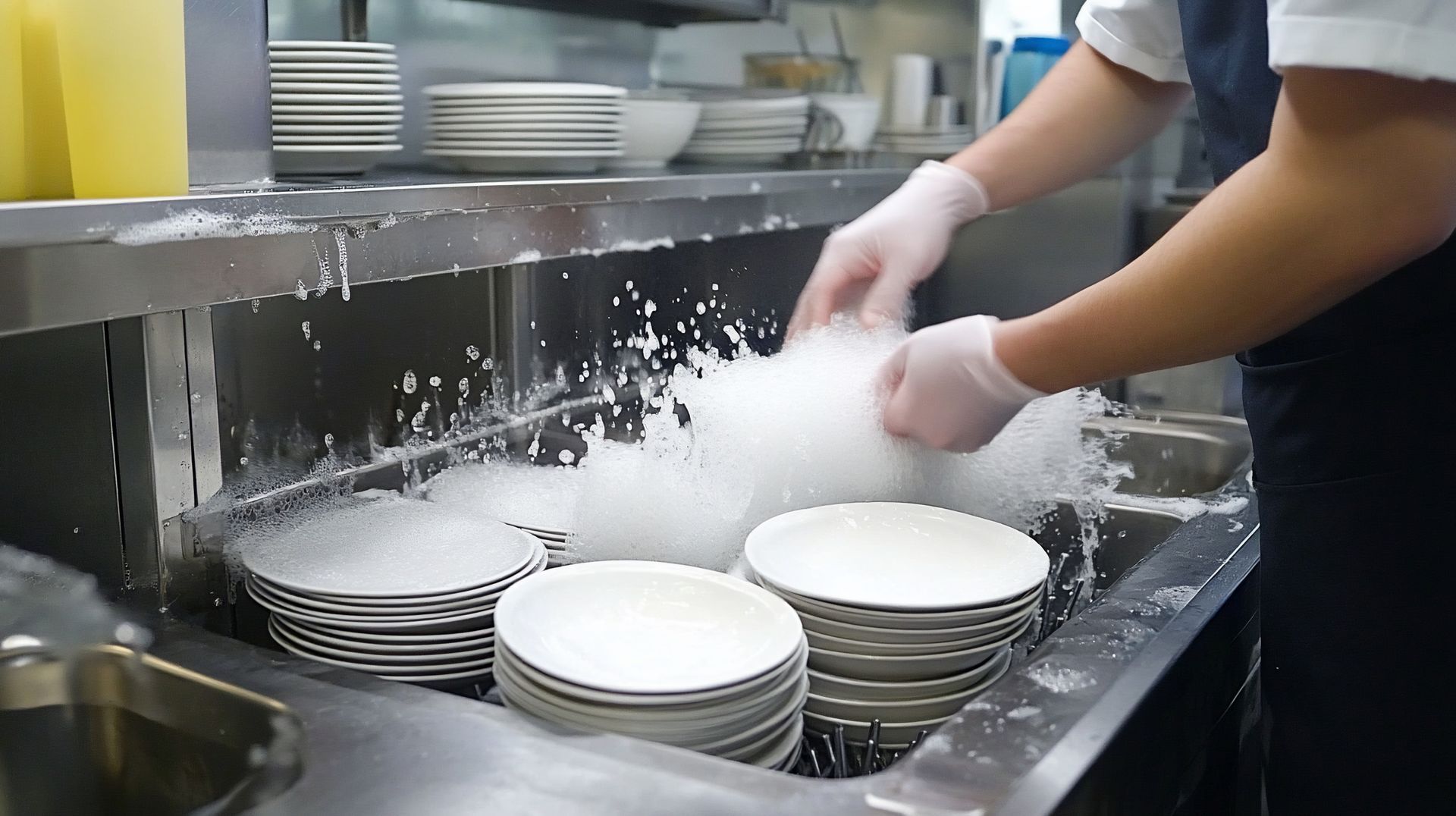
When restaurant owners think about grease interceptor performance, they often focus on how much cooking a kitchen does. While cooking volume certainly matters, what happens at the dishwashing station can have an equally significant impact on the amount of fats, oils and grease (FOG) entering the plumbing system.
Two restaurants with similar menus, equipment and customer volumes can produce very different grease loads depending on how employees handle dirty dishes, how dish machines discharge wastewater and how cleaning products are used. Understanding these practices can help restaurant operators reduce unnecessary FOG entering their grease interceptor and keep their plumbing system operating properly.
Pre-Rinsing Food Into Sinks
One of the simplest ways to increase the amount of solids and grease entering a kitchen's plumbing is to rinse leftover food directly into a sink.
Employees may pre-rinse plates, pans and utensils before placing them into a dish machine. If food scraps, sauces, oils and grease are washed down the drain during this process, all of that material eventually becomes part of the wastewater flowing toward the grease interceptor.
Instead, kitchens should emphasize removing food debris from dishes before they are rinsed. This keeps larger food particles and unnecessary grease out of the drainage system and reduces the amount of material the interceptor has to capture.
Scraping Versus Rinsing
The difference between scraping and rinsing can add up over the course of a busy shift. Scraping dishes into an appropriate food-waste container removes leftover solids without sending them through the plumbing.
Rinsing, on the other hand, can wash grease and food residue directly into the drain. Even small amounts from individual dishes can become substantial when multiplied across hundreds of meals.
Employee training is therefore an important part of grease management. Staff should understand that the goal isn't simply to get dishes clean before they reach the dish machine. It's also to keep as much grease and food waste as possible out of the drainage system.
Dish Machine Discharge
Commercial dish machines can introduce substantial amounts of wastewater into a restaurant's plumbing system. The water discharged from a dish machine may contain grease, food residue and cleaning chemicals collected during the washing process.
The way a kitchen loads and operates its dish machine can influence what ultimately enters the drainage system. Properly scraping dishes before they are washed helps reduce the amount of solids and grease being carried away with the discharge.
Because dishwashing can generate significant wastewater flow, its plumbing connections should also be considered when designing and maintaining a restaurant's grease management system.
Detergents and Emulsification
Cleaning products can also affect what happens to grease in wastewater. Certain detergents can emulsify fats and oils, allowing grease to remain suspended in wastewater rather than separating as readily.
That matters because a grease interceptor is designed to capture FOG before it reaches the sanitary sewer. If grease remains suspended in wastewater, it can potentially pass farther through the plumbing system instead of separating effectively.
Restaurant operators should use cleaning products appropriately and follow manufacturer directions. Employees should also understand that using excessive detergent doesn't necessarily improve cleaning and can affect how grease behaves within the wastewater system.
Why Similar Kitchens Can Have Very Different FOG Loads
Consider two restaurants serving similar food to roughly the same number of customers. One kitchen may carefully scrape plates before washing them, while the other routinely rinses leftover food, sauces and grease down the sink.
The two restaurants may have comparable cooking volumes, but their wastewater characteristics can be very different.
Employee habits, dishwashing procedures, equipment use and cleaning practices all influence how much FOG and food residue enters the plumbing. This is why restaurant operators shouldn't look only at menu items or the amount of food cooked when evaluating grease interceptor performance.
A kitchen's everyday practices can make a meaningful difference.
Good Dishwashing Habits Support Better Grease Management
Want to make grease management easier for your restaurant? Contact us at Southern Green Industries at (404) 419-6887 to request a quote or discuss a grease trap cleaning schedule that works for your operation.
Recent Blog Posts
Contact us Today for a FREE Quote
We are committed to making grease trap cleaning and fryer oil recycling as clean and easy as possible. If you’d like to learn more about our services or get a quote, give us a call at (404) 419-6887.
