
How Floor Drain Placement Affects Long-Term Grease Interceptor Performance
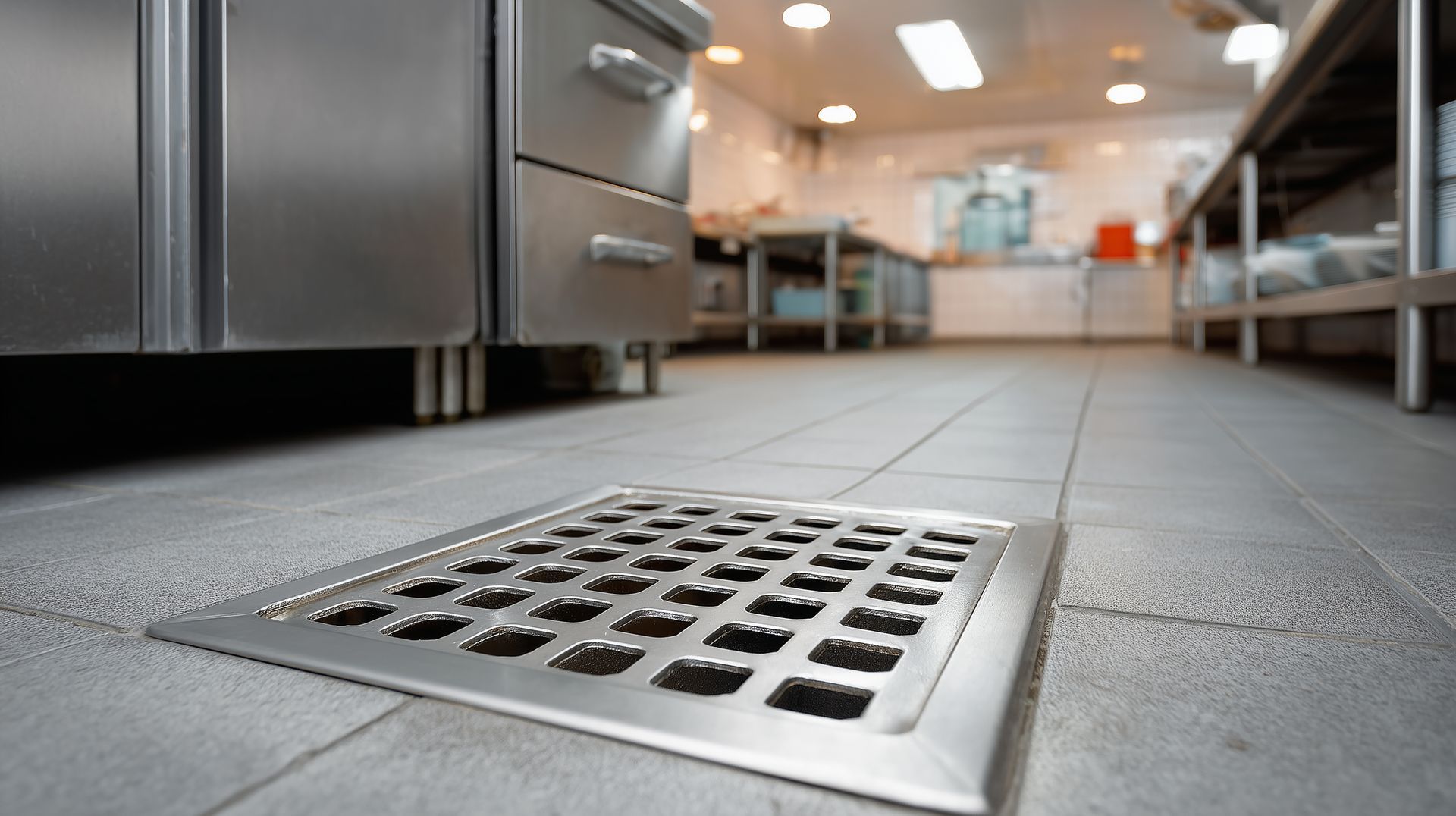
Grease interceptors are designed to separate fats, oils and grease before they enter the sanitary sewer. When they work properly, they protect plumbing systems, reduce backups and extend the life of underground piping. When they struggle, operators often assume the interceptor itself is undersized or poorly maintained.
In many cases, the real issue begins upstream.
Floor drain placement, slab slope, trench drain layout, and mop sink discharge points all influence how wastewater and solids move before they ever reach the interceptor. Poor hydraulic behavior upstream can concentrate grease and food solids into specific branch lines, leading to localized buildup, chronic clogs and uneven loading at the interceptor inlet.
The Upstream Hydraulic Reality
In a commercial kitchen, water does not flow evenly from every fixture into a balanced system. Instead, it moves along the path of least resistance, guided by:
- Floor slope
- Drain location
- Pipe pitch
- Fixture proximity
- Discharge volume and temperature
When floors are improperly sloped or drains are clustered in high-activity grease zones, wastewater carrying heavy FOG loads can repeatedly enter the same branch line. That line becomes a high-concentration corridor of grease discharge.
Over time, this creates upstream accumulation before the interceptor even has a chance to do its job.
Poorly Sloped Floors and Flow Concentration
Floor slope is not just about keeping surfaces dry. It directly impacts how suspended solids and emulsified grease travel.
When slopes are inconsistent or shallow:
- Water ponds and cools on the surface
- Grease begins to congeal before entering the drain
- Solids settle and move in pulses rather than a steady flow
If the slope directs most discharge toward one drain while others remain lightly used, you create uneven hydraulic loading.
That single drain line experiences:
- Higher grease concentration
- More frequent solids transport
- Greater thermal fluctuation
The result is increased buildup along the branch piping upstream of the interceptor. In renovations where floor leveling compounds are added without recalculating slope, these imbalances are common.
Trench Drains: Efficiency or Overconcentration?
Trench drains are popular in high-volume kitchens because they capture runoff across a wide area. However, they can unintentionally concentrate large volumes of FOG-laden discharge into one pipe.
When multiple prep stations, fryers and dish areas slope toward a single trench, the connected branch line receives a dense mixture of:
- Hot grease
- Food particles
- Detergents
- High-temperature wash water
As this mixture travels downstream and cools, grease begins to solidify along pipe walls before reaching the interceptor. Even if the interceptor is properly sized, the upstream line may already be partially restricted.
Without careful design, trench drains become high through put feeders that accelerate localized buildup.
Mop Sinks as Hidden Grease Contributors
Mop sinks are often overlooked in grease management discussions.
Yet they frequently discharge:
- Degreasing chemicals
- Dirty wash water
- Residual oils from floor cleaning
If mop sinks tie into small-diameter branch lines near heavy grease zones, they can:
- Push accumulated grease further downstream in slugs
- Disrupt steady flow patterns
- Re-emulsify the grease temporarily, only for it to resolidify later
Improper placement can cause repeated surge loading into a single section of pipe.
Over time, these surges increase the likelihood of upstream blockages that operators mistakenly blame on interceptor performance.
Uneven Fixture Distribution and Branch Line Overload
In new buildouts, designers sometimes cluster high-grease-producing fixtures for workflow efficiency. While this improves kitchen operations, it can create a plumbing imbalance.
If fryers, grills, pre-rinse stations and trench drains all connect to one lateral before reaching the interceptor, that lateral becomes a concentrated grease corridor.
Other lines entering the interceptor may carry mostly low FOG discharge, creating uneven inlet conditions. This imbalance can reduce separation efficiency and increase maintenance frequency.
Hydraulic balance matters long before wastewater reaches the interceptor tank.
Signs of Upstream Flow Problems
Operators often see symptoms without recognizing the root cause:
- Frequent snaking of the same branch line
- Grease buildup near the cleanouts upstream of the interceptor
- Interceptor pumping intervals are shorter than expected
- Slow drainage in specific floor drains
- Odor near certain kitchen zones
When buildup repeatedly occurs in one section, it is usually a flow concentration issue rather than simple maintenance neglect.
Design Considerations for Long-Term Performance
For renovations and new construction, consider these hydraulic principles:
- Distribute high FOG fixtures across multiple branch lines when possible.
- Ensure consistent floor slope that directs flow evenly rather than concentrating it.
- Size branch piping to handle thermal and solids loading, not just fixture count.
- Avoid connecting all trench drains to a single undersized lateral.
- Evaluate mop sink discharge routing to prevent surge concentration.
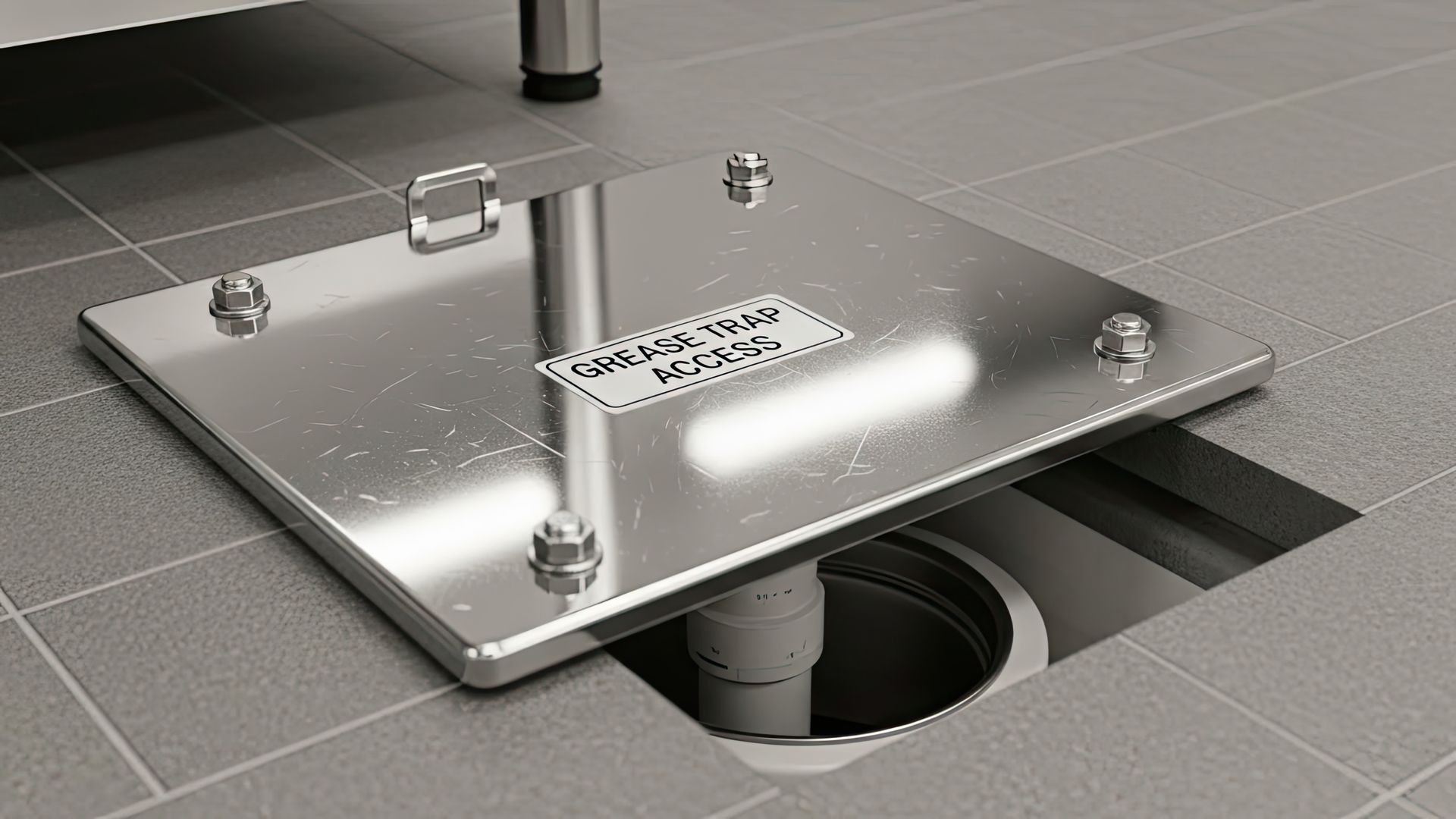
- Use cleanouts strategically in high-risk zones for easier maintenance access.
Why This Matters for Renovations
During tenant improvements or kitchen upgrades, plumbing layouts are often modified without reevaluating hydraulic behavior.
Adding new fryers or dish stations may double the grease load on an existing branch line. Installing trench drains without redistributing connections may unintentionally funnel most discharge into one pipe.
Protect Interceptor Performance from the Floor Up
If you are planning a renovation, new buildout or experiencing repeated upstream grease issues, Southern Green Inc. can evaluate your layout and hydraulic flow patterns.
Contact Southern Green Inc. or give us a call at (404) 419-6887 today to ensure your system is balanced from the floor surface to the interceptor tank, protecting your investment and reducing future maintenance costs.
Recent Blog Posts
Contact us Today for a FREE Quote
We are committed to making grease trap cleaning and fryer oil recycling as clean and easy as possible. If you’d like to learn more about our services or get a quote, give us a call at (404) 419-6887.
