
How Interceptor Location, Front of House vs. Rear Pad, Affects Service Reliability

Grease interceptors are rarely part of the design conversation once construction is complete. They are buried, out of sight and assumed to be a maintenance detail handled a few times per year.
But where that interceptor is located, front of house near the entrance or on a rear service pad, has a direct impact on service reliability, tenant experience and long-term operational risk.
For developers, property managers, and restaurant operators, interceptor placement is not just a plumbing decision. It is a logistics and risk management decision.
Front of House Placement: Convenience with Consequences
In some retail centers and urban infill projects, grease interceptors are installed near the front of the building for utility access efficiency. This may simplify initial construction tie-ins, but it can introduce ongoing operational complications.
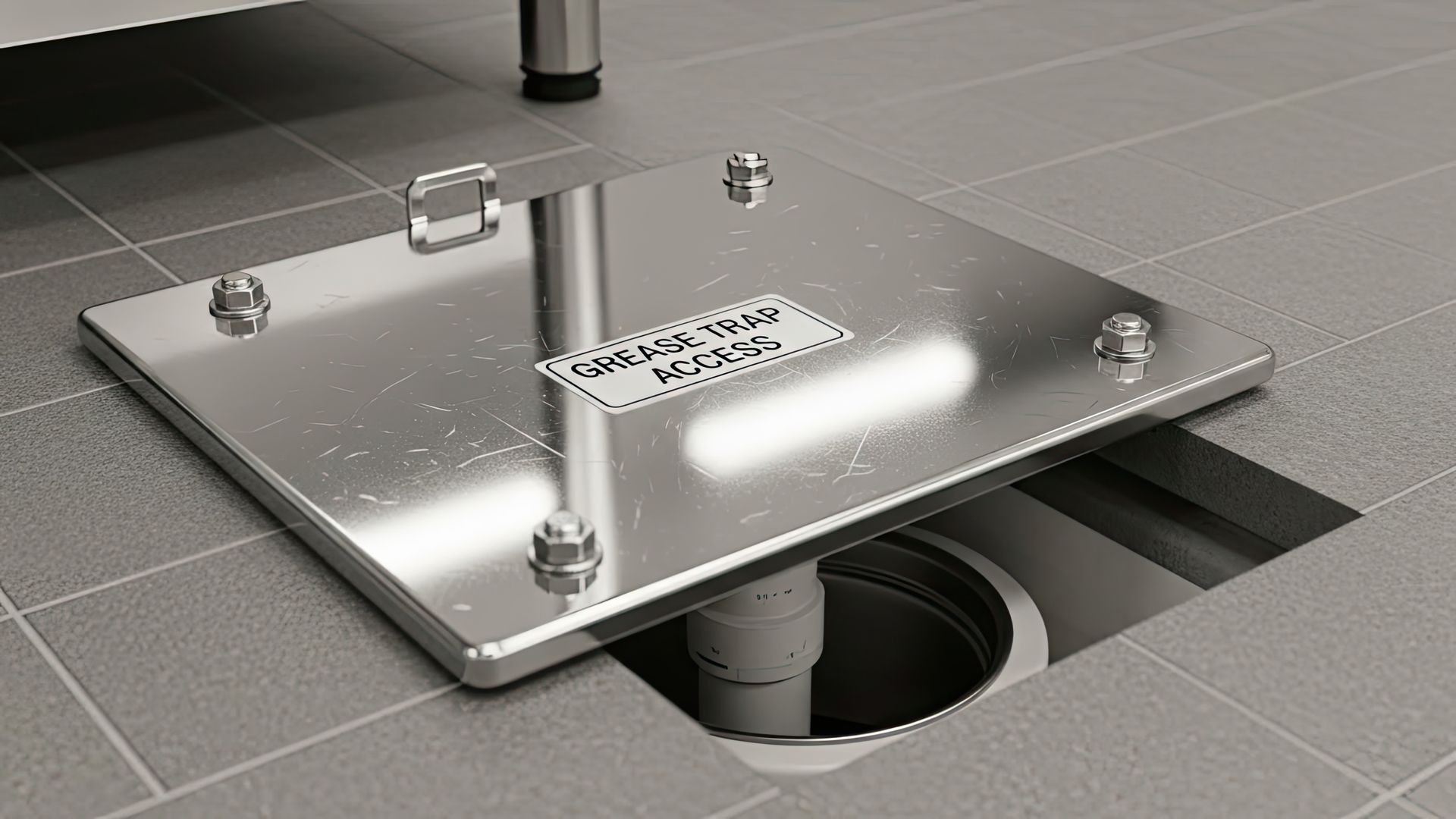
Customer-Facing Access Lids
When interceptor lids are positioned near entrances, patios or primary walkways, routine service becomes highly visible. During pump-outs:
- Access lids are removed in customer areas
- Vacuum hoses stretch across sidewalks
- Service trucks may park in prime storefront spaces
- Temporary odors can impact foot traffic
Even with professional service practices, the optics can affect tenant perception and customer experience.
In mixed-use developments, this becomes especially sensitive. No developer wants grease service to be the most noticeable feature at the main entry.
Parking Conflicts and Access Limitations
Front-of-house interceptors often share space with customer parking. On service day, the vacuum truck needs:
- Close proximity to access lids
- A straight hose path
- Stable positioning for safe pumping
If vehicles occupy nearby spaces, service crews may need to:
- Block drive lanes
- Delay service until cars are moved
- Run extended hose lengths around obstacles
Rear Pad Placement: Operational Efficiency with Design Considerations
Rear service pads are typically preferred for commercial grease interceptor placement. When properly designed, they support smoother operations and minimize customer impact.
Benefits include:
- Dedicated service vehicle access
- Separation from customer areas
- Reduced visibility during maintenance
- Shorter, direct hose routes
However, rear placement is not automatically problem-free. Design oversights can create different service reliability risks.
Landscaping and Screening Interference
Developers often want rear service areas screened with landscaping, fencing, or decorative enclosures. While aesthetically beneficial, these features can interfere with routine maintenance.
Common issues include:
- Access lids partially covered by mulch or shrubs
- Trees planted too close to access points
- Decorative fencing blocking truck positioning
- Grade changes that make lid removal difficult
Hose Distance and Pumping Efficiency
Vacuum trucks operate most efficiently when parked close to the interceptor. Excessive hose distance introduces several risks:
- Reduced suction strength
- Increased pumping time
- Greater chance of hose damage
- Higher spill potential
When interceptors are positioned far from accessible drive lanes, crews may need to run hoses across loading docks, around dumpsters, or through narrow service corridors.
These conditions increase liability exposure and reduce scheduling predictability.
In extreme cases, service providers may decline locations that are too difficult to access safely.
Operational Reliability and Scheduling
Interceptor service is not just about cleaning. It is about consistency.
If access is unreliable due to:
- Customer parking conflicts
- Delivery truck congestion
- Shared drive aisle blockages
- Security gate restrictions
Service appointments may be delayed or rescheduled. Over time, irregular maintenance can lead to:
- Overfilled interceptors
- Odor complaints
- Emergency backups
- Health department concerns
Risk Exposure and Liability Considerations
From a risk perspective, interceptor placement affects:
- Slip and fall exposure from hoses across walkways
- Traffic conflicts in active parking areas
- Spill containment challenges
- Worker safety in congested environments
Front-of-house locations increase public exposure during service. Rear pad placements reduce public interaction but require adequate lighting, grading, and maneuvering space to maintain safety.
Developers should consider not just aesthetics but ongoing service conditions.
Developer and Landlord Planning Considerations
When planning new construction or major renovations, consider the following:
- Ensure direct truck access within practical hose distance.
- Keep lids out of primary customer sightlines when possible.
- Avoid placing interceptors in premium parking spaces.
- Provide clear, hardscaped access free of landscaping interference.
- Confirm that access routes remain viable after dumpsters, enclosures, and screening elements are installed.
- Evaluate how tenant turnover may affect service frequency.
Tenant Turnover and Changing Service Needs
In retail centers, restaurant concepts change. A quick-service restaurant may require more frequent pump-outs than a light café.
If the interceptor location complicates access, increased service frequency amplifies the operational burden.
A location that was manageable twice per year may become disruptive when service is required monthly.
Planning for long-term flexibility supports property value and tenant satisfaction.
Reliability Is About Access
If you are planning a development, evaluating an existing property or experiencing recurring service challenges, Southern Green Industries can assess your interceptor placement and recommend practical solutions to improve reliability.
Contact Southern Green Industries today for a free quote or give us a call at (404) 419-6887 to keep your grease management system supporting your operations.
Recent Blog Posts
Contact us Today for a FREE Quote
We are committed to making grease trap cleaning and fryer oil recycling as clean and easy as possible. If you’d like to learn more about our services or get a quote, give us a call at (404) 419-6887.
