
The Hidden Cost of Over-Sized Grease Interceptors
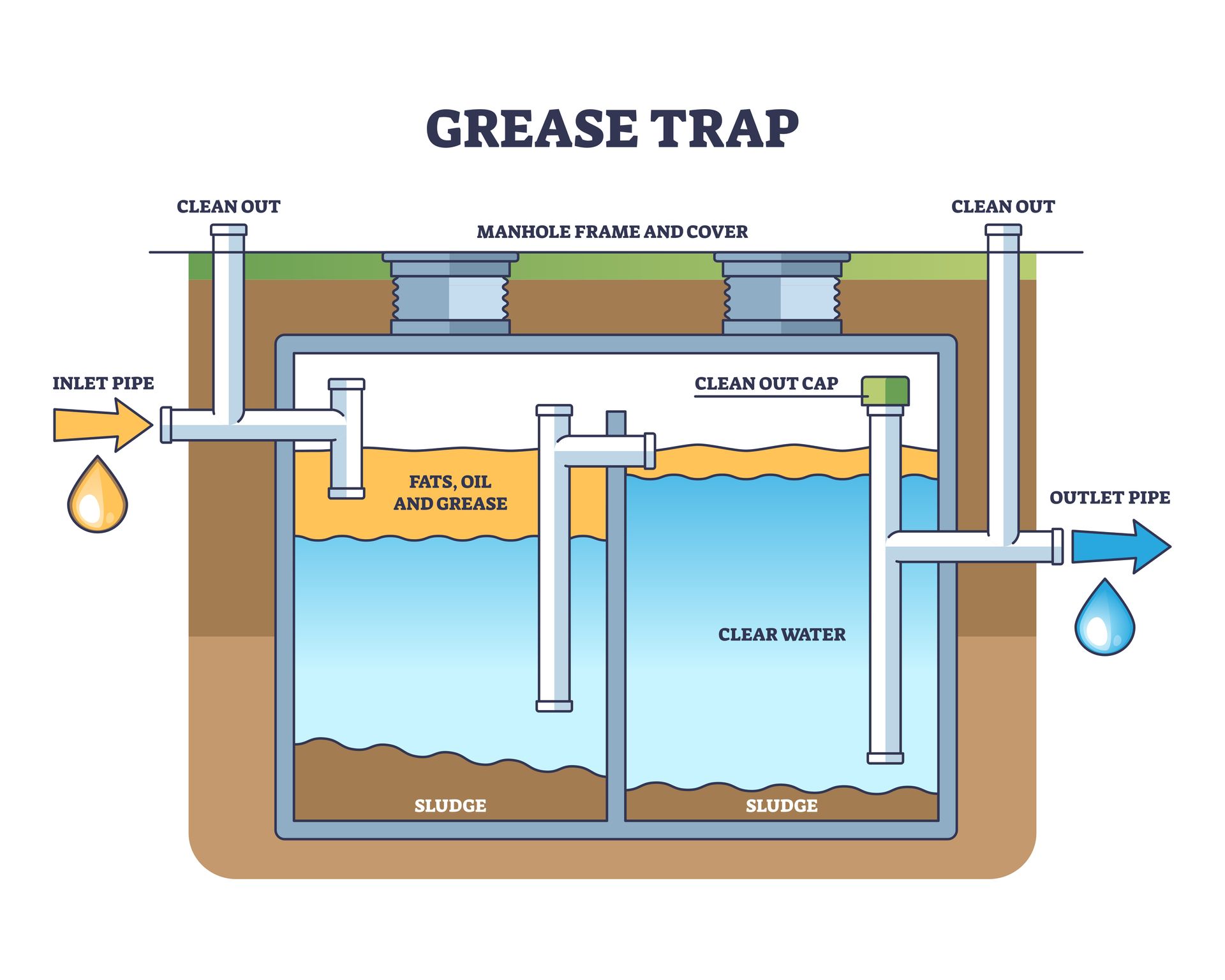
Bigger sounds better, especially when it comes to infrastructure. A large grease interceptor should mean fewer pump-outs, better separation, and extra capacity for peak demand. Right?
Not always.
In fact, an over-sized grease interceptor can create performance problems that are expensive, messy, and frustrating, especially in one very common scenario: a lower-volume restaurant leasing a space that was previously occupied by a high-volume operator.
The interceptor was designed for heavy daily discharge. Now it serves a lighter concept with lower grease output and reduced water flow. On paper, that seems like a safe margin. In reality, it can introduce retention time imbalances, solids settling inefficiencies, septic conditions and persistent odor issues.
The Real-World Scenario: A Tenant Change with Lower Volume
Picture this.
A fast-paced fried chicken concept closes. A small café or specialty bakery moves into the space. The underground grease interceptor remains the same, built for high grease discharge and constant flow.
The new tenant produces significantly less FOG and sends far less water through the system each day.
Instead of steady hydraulic turnover, the tank now experiences extended retention times and stagnant conditions.
That is where problems begin.
Retention Time Imbalances
Grease interceptors are designed around hydraulic retention time, the period wastewater remains inside the tank to allow fats, oils and grease to separate and float while solids settle.
When the flow volume drops significantly:
- Wastewater remains in the tank longer than intended
- Surface grease layers thicken
- Solids remain undisturbed for extended periods
- Organic matter begins to break down anaerobically
Long retention sounds helpful for separation, but excessive retention changes system behavior. Instead of efficient stratification and removal, you get stagnation.
Solids Settling Inefficiencies in Low-Flow Conditions
Grease interceptors rely on predictable inlet velocity and turnover. In oversized tanks serving low-volume kitchens:
- Inlet energy may be too low to distribute flow properly
- Solids can accumulate near the inlet rather than spreading evenly
- Sludge may compact in isolated zones
With insufficient turbulence and turnover, solids do not behave as expected. They may form dense mats or hard deposits that are more difficult to remove during pump-outs.
Over time, this localized buildup reduces effective tank volume and interferes with separation efficiency.
Ironically, a larger tank can perform worse than a properly sized one under low-flow conditions.
Septic Conditions and Anaerobic Activity
One of the most significant hidden risks of oversizing is the development of septic conditions.
When wastewater sits too long without adequate turnover:
- Oxygen levels drop
- Anaerobic bacteria dominate
- Hydrogen sulfide gas can form
- Strong odors develop
In extreme cases, these conditions can:
- Corrode tank components
- Damage concrete structures
- Create unpleasant odors near cleanouts and access lids
- Affect adjacent tenant spaces
Low-flow kitchens rarely anticipate septic activity because they assume smaller grease output means fewer problems. But the issue is not grease volume alone. It is the mismatch between tank size and daily discharge.
Odor Development in Underutilized Tanks
Landlords often receive odor complaints without realizing the interceptor is oversized for the current tenant mix.
When grease layers remain undisturbed for long periods:
- Surface crust thickens
- Sludge decomposes
- Gases accumulate
In high-volume kitchens, regular inflow and pump-outs keep conditions more dynamic. In low-volume operations, stagnation dominates.
Odor migration can occur through:
- Floor drains
- Cleanouts
- Improperly sealed access lids
- Shared plumbing infrastructure
This becomes especially problematic in mixed-use developments where residential or retail tenants share proximity to restaurant infrastructure.
Financial Implications for Landlords and Developers
Oversized interceptors are often viewed as future-proof assets. But when tenant turnover shifts usage patterns, they can introduce:
- More frequent emergency service calls
- Increased odor mitigation costs
- Complaints that affect lease renewals
- Higher pump-out expenses due to uneven sludge accumulation
- Potential code compliance concerns if performance degrades
In some cases, property owners assume the tenant is mismanaging grease disposal. While poor practices can contribute, hydraulic imbalance is frequently the underlying cause.
Why Oversizing Happens
Oversizing often occurs when:
- A previous tenant had unusually high discharge
- The system was built for peak capacity projections
- Developers installed large interceptors to accommodate future concepts
- Design assumptions were not updated during tenant transitions
Without evaluating actual flow rates and usage patterns, the tank becomes mismatched to its operational environment.
Signs an Interceptor May Be Oversized for Current Use
Look for these indicators:
- Persistent odors despite regular pump-outs
- Sludge compaction near the inlet
- Thick grease caps forming quickly, even with low discharge
- Complaints from neighboring tenants
- Extended intervals between actual wastewater inflow events
These symptoms point to hydraulic imbalance rather than simple maintenance failure.
Correcting the Imbalance
Solutions depend on the specific system, but may include:
- Adjusting pump-out frequency to match retention behavior
- Evaluating inlet configuration
- Assessing baffle integrity and flow path
- Considering interceptor resizing or compartment modification in extreme cases
- Reviewing fixture connections to ensure even distribution
The key is diagnosing the root cause rather than assuming bigger equals better.
Rethinking “Bigger Is Better”
If you are experiencing recurring odor, buildup or performance issues in a property with a changing tenant mix, Southern Green Industries can evaluate your grease interceptor system and upstream hydraulics. Our team helps property owners identify sizing imbalances and implement practical solutions that protect long-term performance.
Contact Southern Green Industries here today or give us a call at (404) 419-6887 to ensure your grease interceptor is working with your current operation, not against it.
Recent Blog Posts
Contact us Today for a FREE Quote
We are committed to making grease trap cleaning and fryer oil recycling as clean and easy as possible. If you’d like to learn more about our services or get a quote, give us a call at (404) 419-6887.
