
Why Does One Compartment of a Grease Interceptor Sometimes Accumulate More Waste Than Another?
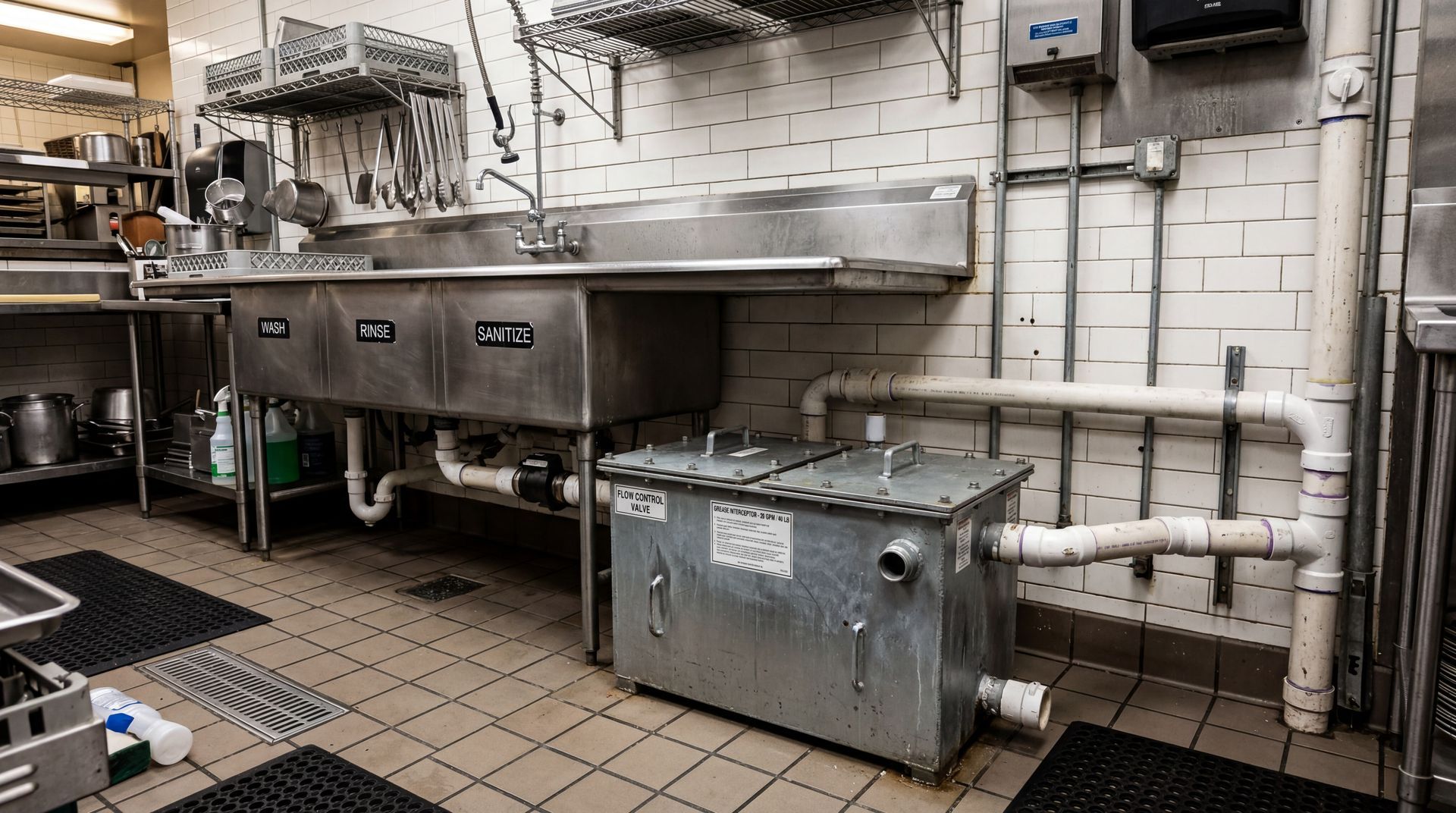
When a grease interceptor has multiple compartments, it is not unusual to find that one compartment contains noticeably more grease or solids than another during a cleaning. Some variation can be a normal result of how wastewater, FOG and food solids move through the system. However, a significant imbalance can also provide useful clues about flow patterns or potential problems inside the interceptor.
Normal Separation Patterns
Waste does not necessarily distribute evenly across every compartment of a grease interceptor. The amount and type of waste entering the system and the interceptor's internal configuration can all influence where material accumulates.
The first compartment may naturally collect a greater concentration of solids because it receives wastewater directly from the incoming line. Depending on the design, grease may also accumulate differently between compartments as it moves through the interceptor.
One benefit of working with an experienced, attentive grease interceptor service provider is that unusual conditions may be noticed during routine cleaning. If an accumulation pattern looks significantly different from what is normally found in the interceptor, the technician can bring it to the operator's attention so it can be investigated further if necessary.
When Uneven Accumulation May Indicate a Flow Problem
A more pronounced difference between compartments can sometimes point to an issue with how wastewater is moving through the interceptor. Internal components are intended to direct and slow the flow so separation can occur effectively. If that flow is disrupted, waste may accumulate in unexpected locations.
One potential issue is a damaged, improperly positioned or deteriorated baffle. Baffles help control the movement of wastewater between sections of the interceptor. If one is cracked, missing or otherwise compromised, the intended flow pattern can change.
Tees and inlet or outlet piping can create similar problems. If a tee becomes damaged, obstructed or displaced, wastewater may not be entering or exiting the compartment as intended. In some cases, this can contribute to excessive accumulation in one section while another appears unusually clean.
Watch for Signs of Short-Circuiting
Short-circuiting is another potential explanation for unusual accumulation patterns. Rather than following the intended path through the interceptor, wastewater can sometimes move too quickly or take a less effective route from the inlet toward the outlet.
When this happens, wastewater may have less opportunity for solids and FOG to separate before leaving the interceptor.
An interceptor that appears relatively clean in one area but shows unusual buildup elsewhere may warrant closer evaluation, particularly if there are other signs of poor performance.
Short-circuiting can result from internal component problems, changes in flow conditions or other issues affecting the interceptor's intended hydraulics. It is not something that can always be diagnosed from the amount of material in a single compartment alone.
What Should Operators Look For?
A service provider's observations during routine cleaning can provide useful information, particularly when something looks substantially different from previous visits.
- Some of the conditions that may stand out during routine service include:
- Changes in the location or consistency of grease and solids buildup
- Damaged, loose or deteriorated baffles or tees
- Unusual flow through the interceptor during service
- Excessive solids in a compartment where they would not normally be expected
- Recurring drainage or sewer-line issues despite regular interceptor maintenance
- Significant changes in accumulation patterns following plumbing or equipment modifications
Tracking these observations over time can make it easier to distinguish a normal characteristic of the interceptor from a developing mechanical or flow-related issue.
Uneven Accumulation Does Not Necessarily Indicate a Problem
Different amounts of FOG and solids between interceptor compartments can be part of normal operation. What matters is recognizing when an accumulation pattern is unusual for that interceptor or appears alongside other signs that may warrant further investigation.
Southern Green Industries provides professional grease trap and interceptor cleaning throughout Atlanta, with flexible scheduling designed to minimize disruption to restaurant operations. We offer both recurring and one-time service, provide service manifests for your records and can handle the necessary paperwork for your operation.
Need reliable grease interceptor service? Contact us at (404) 419-6887 to discuss your service schedule or request a quote.
Recent Blog Posts

Contact us Today for a FREE Quote
We are committed to making grease trap cleaning and fryer oil recycling as clean and easy as possible. If you’d like to learn more about our services or get a quote, give us a call at (404) 419-6887.
