
Grease Interceptor Odors That Signal Structural or Hydraulic Problems

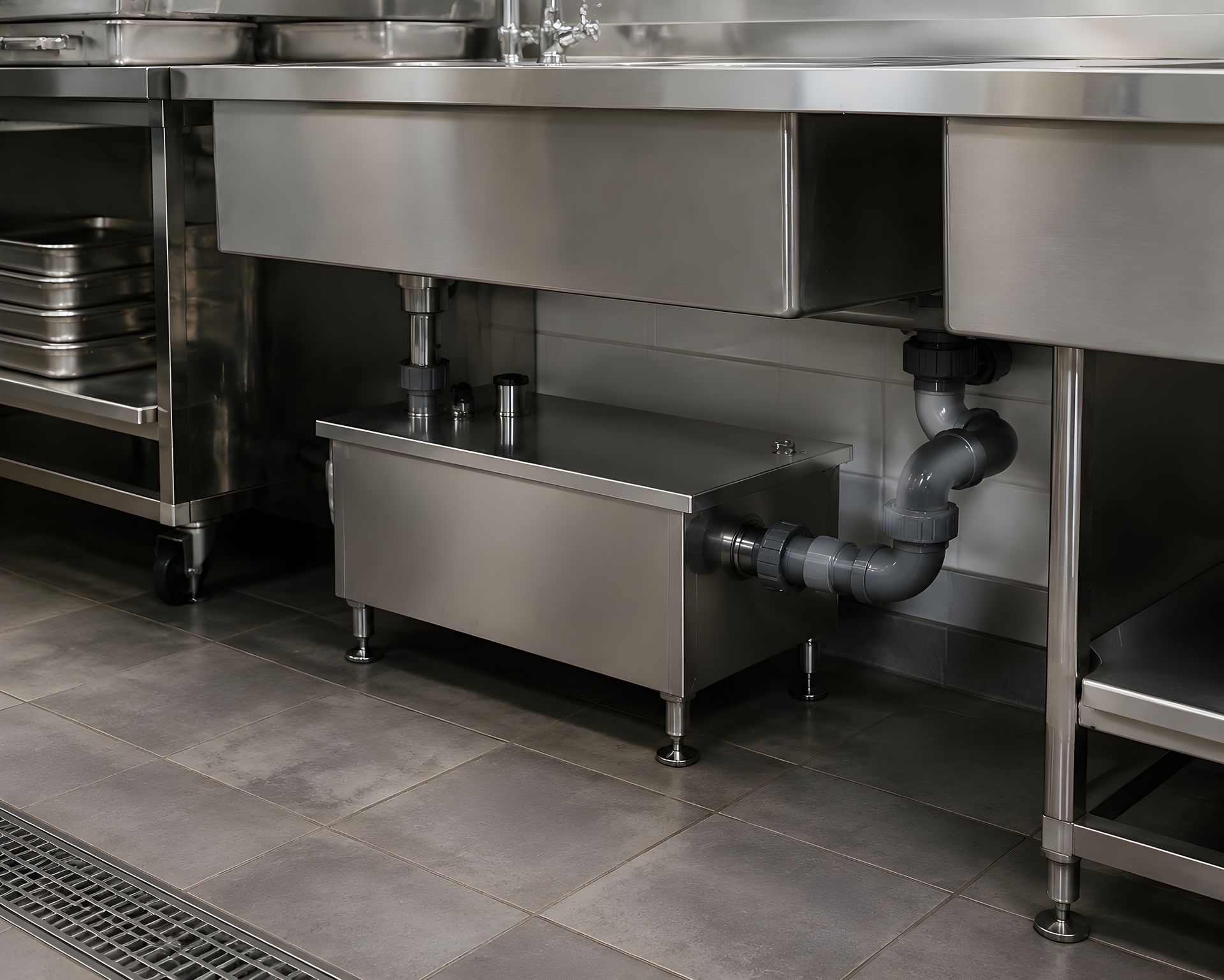
Grease interceptors are not odor-free systems, even when they are serviced on schedule. Some level of smell between cleanings is expected, particularly in high-volume kitchens. What matters is how odors behave over time, where they appear and what conditions trigger them. Those patterns often point to mechanical or hydraulic problems that routine pumping alone will not resolve.
When Odors Return Quickly After Professional Servicing
One of the clearest warning signs is odor that returns within days of a full pump-out. A properly cleaned interceptor should reset odor conditions temporarily. When smells reappear almost immediately, it usually means something inside the tank is preventing normal separation and circulation.
Collapsed baffles, deteriorated internal walls or damaged outlet tees allow wastewater to short-circuit through the interceptor. Instead of flowing through designed separation zones, grease and solids move too quickly, leaving anaerobic pockets behind. Those pockets continue producing gas regardless of how often the unit is pumped. In these cases, increasing cleaning frequency does little more than mask a structural problem.
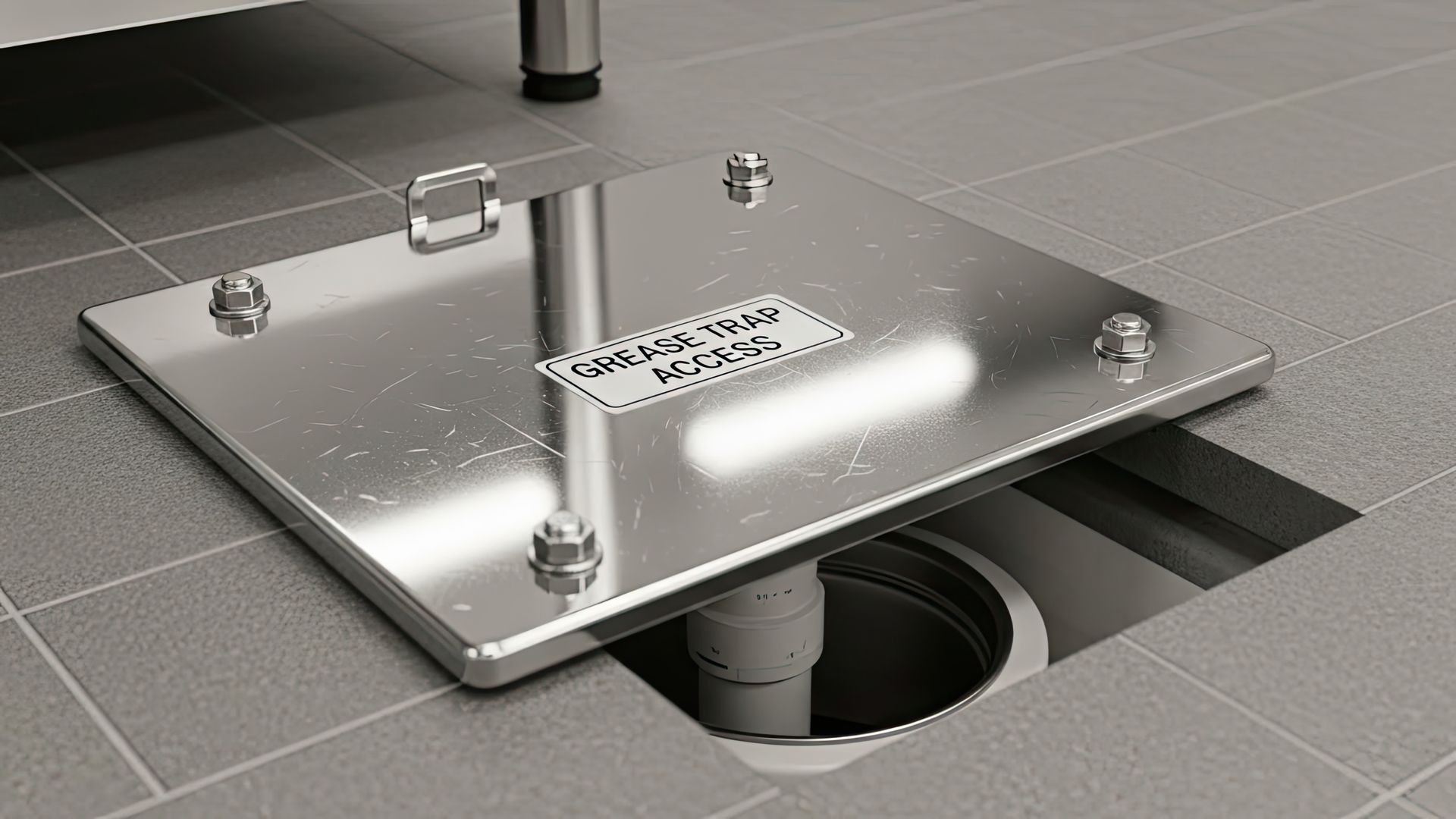
Strong Odors Concentrated Around Exterior Lids and Risers
Odors that are strongest outdoors, especially around access lids, often indicate excessive solids retention below the flow line. When solids occupy too much of the working volume, circulation slows and conditions inside the interceptor turn septic.
This is different from a light surface grease smell. Heavy, sulfurous odors near lids suggest that gases are building up in stagnant zones and venting at the easiest exit point. The issue is not the lid seal or surrounding slab. It is a loss of usable volume inside the tank that needs to be evaluated during interceptor maintenance.
Odors That Appear Only During Peak Kitchen Use
Some facilities report no noticeable smell during off-hours but strong odors during lunch or dinner rush. That pattern points to hydraulic stress rather than neglect.
High flow events can push trapped gases out of the interceptor when venting is inadequate or when the system is undersized for actual usage. Dish machines cycling, fryer boil-outs or simultaneous sink discharge can create pressure changes that force odors toward access points or upstream drains. If smells track closely with peak activity, the problem is likely tied to flow dynamics, not how recently the interceptor was cleaned.
Odors Migrating Indoors Through Floor Drains
When grease odors enter the building through floor drains or prep sinks, the problem is likely upstream. This usually happens when negative pressure pulls gases out of the interceptor and into the plumbing system.
Blocked or improperly configured vent stacks, compromised trap seals or poorly balanced discharge can all contribute. Even a clean interceptor can release odors indoors if venting cannot handle pressure changes. This type of issue often triggers health complaints and staff concerns despite the interceptor being technically compliant.
Odors That Worsen After Heavy Rain or Washdown Events
Managers sometimes assume intensifying odors after storms or large-volume washdowns are simply unavoidable, but it should be taken seriously as a potential symptom of problems. Rain-driven groundwater infiltration can disturb settled solids or introduce cooler water that disrupts internal stratification.
In some cases, worsening odors after rain point to structural cracks, compromised seams or surrounding soil conditions affecting the interceptor. These symptoms frequently appear before visible failure or backup and should be treated as early indicators of vulnerability.
Why Odor Patterns Matter More Than Odor Intensity
A strong smell does not always signal a severe problem, and a mild but persistent odor can indicate something more serious. Experienced grease trap servicing crews pay attention to timing, location and recurrence of odors, not just intensity.
Odor behavior helps differentiate between normal maintenance needs and conditions that require repair, adjustment or further inspection. Ignoring those distinctions often leads to repeated service calls without meaningful improvement.
Bring Up Your Odor Concerns to Your Grease Trap Technician
If odor issues are not constant but occur under specific conditions, they are still worth discussing during service. When a Southern Green technician is on site, bringing up those observations allows them to check more than just grease depth.
That may include looking at internal component condition, verifying outlet tee placement, assessing solids accumulation below the flow line or noting venting behavior during pump-out. These checks can often be performed as part of routine interceptor maintenance and help determine whether the issue is developing into something larger.
Addressing Odor Issues for Atlanta Food Service Businesses Before They Escalate
Persistent or pattern-based odors rarely resolve on their own. They tend to worsen if left unaddressed, leading to accelerated corrosion, reduced interceptor performance or compliance issues. Early evaluation by a grease trap technician keeps corrective work manageable and prevents disruption.
Southern Green Industries approaches grease interceptor problems with a focus on structure and hydraulics, not just removal of contents. If your facility is experiencing recurring or condition-specific odors, our team can assess what the system is telling you during scheduled grease trap servicing.
Call Southern Green Industries at (404) 419-6887 to schedule service or discuss ongoing interceptor maintenance needs.
Recent Blog Posts
Contact us Today for a FREE Quote
We are committed to making grease trap cleaning and fryer oil recycling as clean and easy as possible. If you’d like to learn more about our services or get a quote, give us a call at (404) 419-6887.
